LADYBIRDS
Bright and well defended
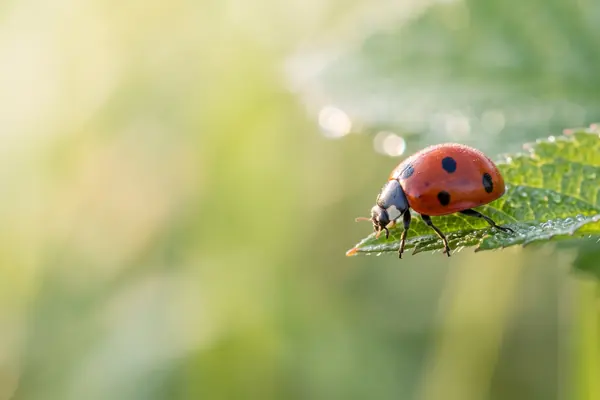
A 2015 study of five ladybird species found that those that stand out most against the leaves also tended to be the most toxic. Their colours are honest signals.
See the numbers
WHAT THE RESEARCH FOUND
BACK OFF in red and black
AI-generated image, not a photograph of a real person or place.
Some insects want to be seen.
Ladybirds, cinnabar moths and wasps wear bold red, orange, yellow and black. Scientists call it warning colouration: a signal to birds that this meal is not worth the trouble.
THE SHORT ANSWER
Not every colourful insect is showing off.
Many are telling predators to stay away.
LADYBIRDS
A 2015 study of five ladybird species found that those that stand out most against the leaves also tended to be the most toxic. Their colours are honest signals.
See the numbersCINNABAR MOTH
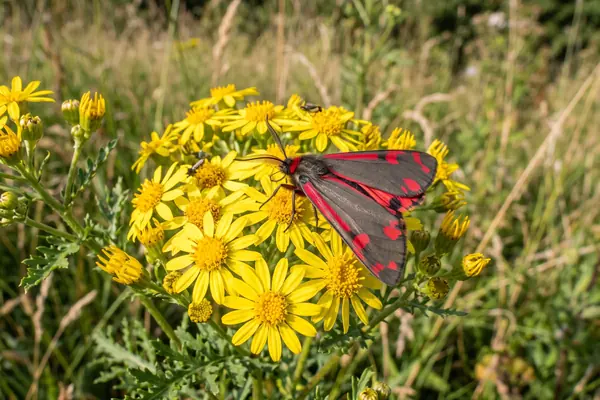
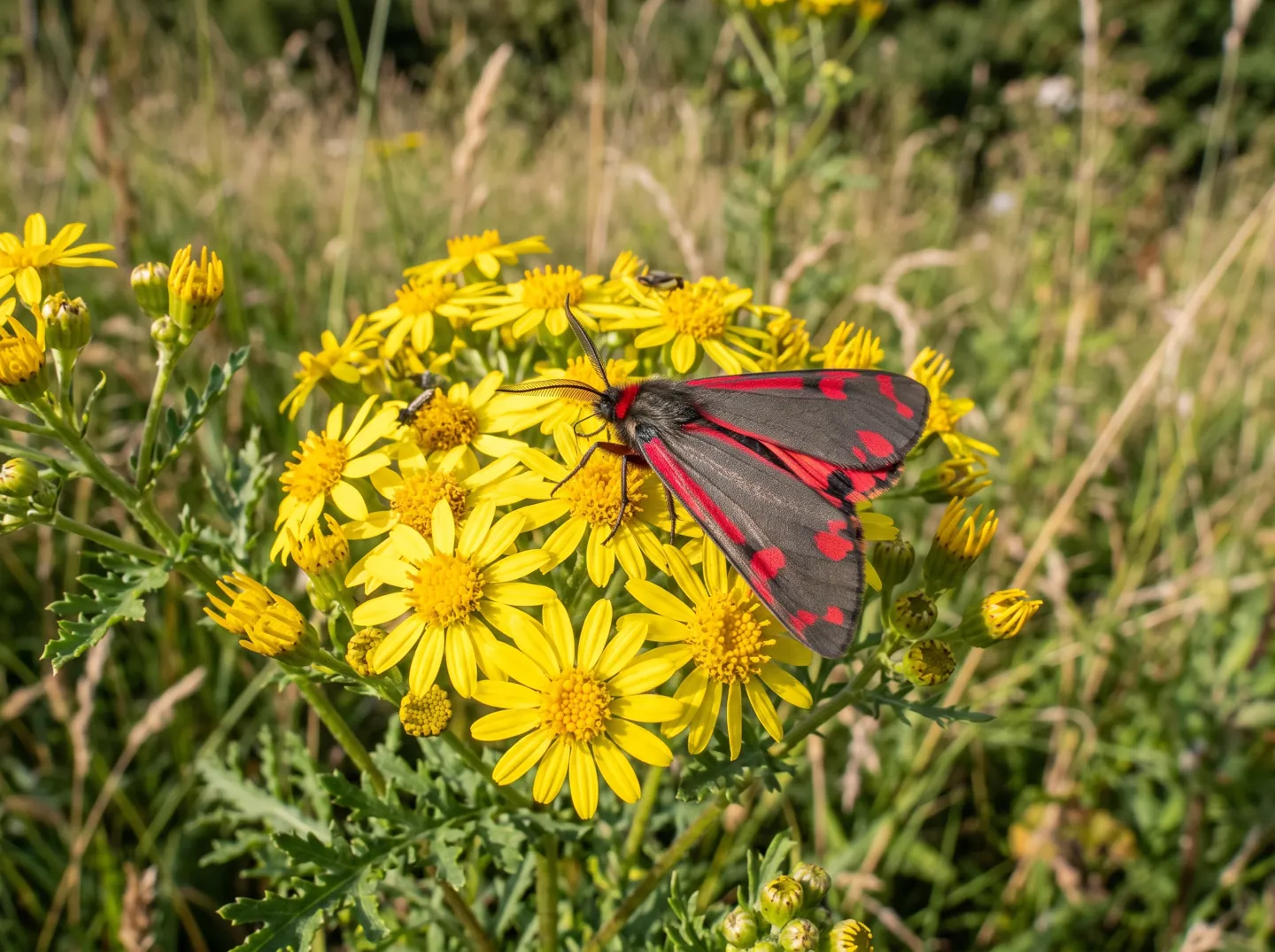
Butterfly Conservation calls the red-and-black cinnabar unmistakeable. Its caterpillars feed on common ragwort, a plant that contains poisonous alkaloids.
Compare the signalsHOVERFLIES
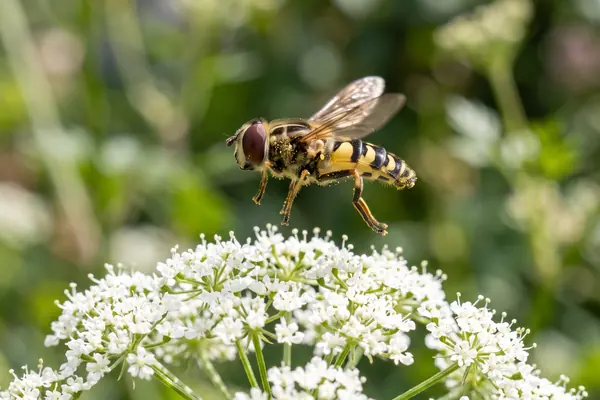
Hoverflies are colourful but defenceless. Many look like wasps or bees, a copy-cat trick called Batesian mimicry.
Spot one yourself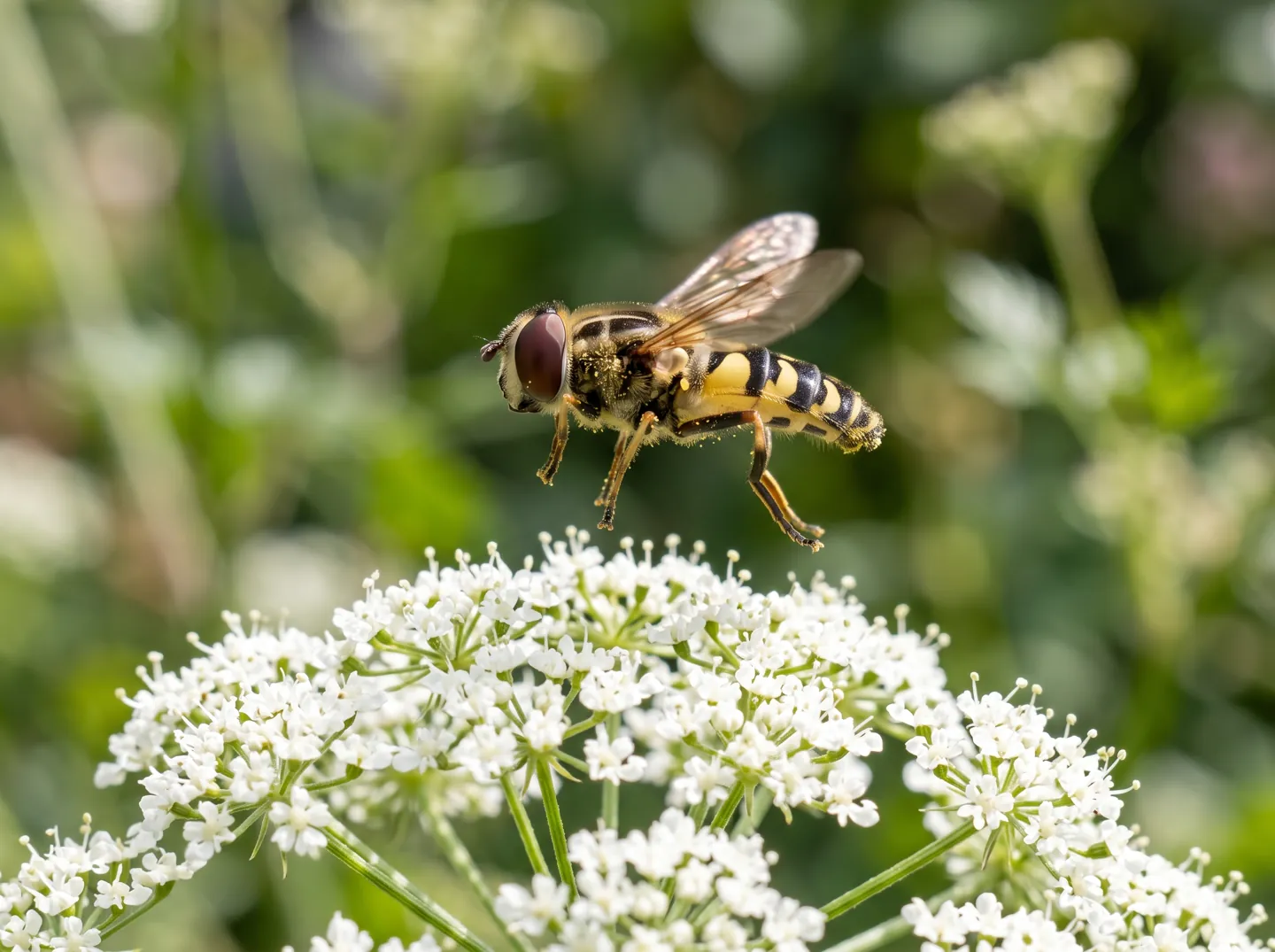
FOUR THINGS TO LOOK FOR
You need no kit, just a slow look at leaves and flowers on a sunny day. Watch, photograph and leave the insects where they are.
Look at the leaves and flowers of common ragwort, the food plant of cinnabar caterpillars, in grassy places, railway banks and dunes.
Compare how a ladybird stands out against its leaf. In the 2015 study, contrast with the background was the best guide to toxicity.
Orange ladybirds often bask or feed on the underside of sycamore leaves, out of sight of birds above.
A stripy insect hovering over flowers may be a hoverfly: a harmless fly wearing a wasp's colours.
TWO NUMBERS WORTH KNOWING
One figure from a field test with paper ladybirds,
one from government guidance on ragwort.
6%
Models attacked by wild birds in 48 hours
Researchers pinned 750 paper ladybirds to leaves along 15 transects; 50 were attacked. Red, orange and yellow models survived better than brown and black ones.
PAPER LADYBIRDS · SCI. REP. 2015
77+ species
Leaf-eating insects that feed on ragwort
Government guidance says ragwort is the food plant of at least 77 species of foliage-eating insects, and that the best known is the cinnabar moth.
RAGWORT · DEFRA CODE OF PRACTICE
The same Defra code says common ragwort contains pyrrolizidine alkaloids that are poisonous to horses and other livestock, and that it is also very important for wildlife.
READ THE SIGNAL
Pick a garden insect to see how strongly its colours advertise a defence. The bar shows how bold the warning is, and the note says whether there is anything behind it.
Based on a University of Exeter and Cambridge study of British ladybirds, Butterfly Conservation and a University of Central Lancashire study of hoverflies.
HONEST SIGNALS AND BLUFFS
Warning colours work because predators learn them. The theory is that a bird with a nasty experience of one pattern will avoid others that look alike, so a palatable species can borrow protection from a defended one.
That borrowing is Batesian mimicry. A UCLan study of British hoverflies matched many species to the bees and wasps they resemble and found evidence that certain hoverflies gain protection from the likeness, though not every result fitted the theory neatly.
In conversation
It is the use of bright, conspicuous colours, often red, orange, yellow and black, paired with a defence such as toxic chemicals, to warn predators that an animal is not worth attacking. Scientists call it aposematism.
Among the five British species in a 2015 study, those with more contrast against their background tended to be more toxic. The orange ladybird was the exception: the most toxic, but not the most eye-catching.
Researchers photographed ladybirds with cameras sensitive to ultraviolet light to model how they look to birds, whose colour vision is very different from ours. Wild birds attacked the more conspicuous paper models less often.
No. Hoverflies are flies, described in a UCLan study as colourful but defenceless. Their wasp-like or bee-like look is a form of mimicry.
Both, depending on where it grows. Defra guidance says it is poisonous to horses and livestock, but also that it is a native plant that is very important for wildlife and feeds many insects.
Each figure on this page comes from the sources below.
ABOUT THIS NAME
doodlecolorsplash.com is part of the DoodleSale portfolio. It isn't in an auction right now, but you can ask about leasing it.